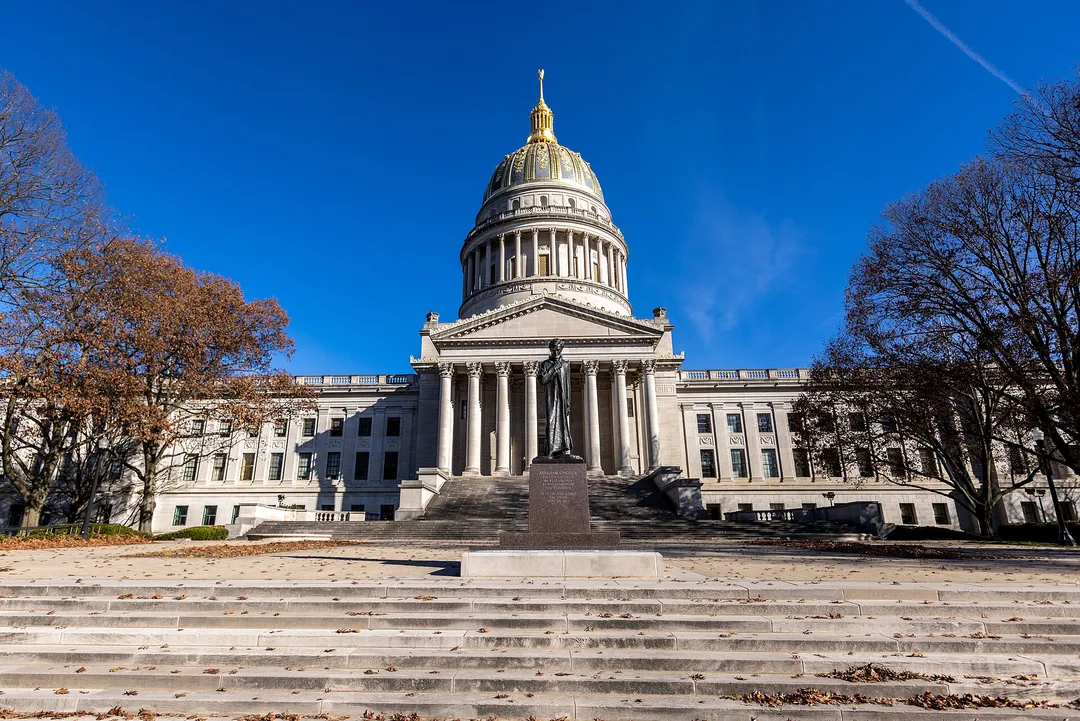
Best Legal Studies Master’s Programs in West Virginia
West Virginia's Department of Environmental Protection makes public notices, documents and comment resources available online. For a master's in legal studies in West Virginia, those records offer a way to test your interest in agency procedure and environmental administration. Follow a public issue through its documents before choosing a concentration. If you enjoy understanding the evidence and explaining a process, look for a degree with substantial legal research and supervised writing.
American Public University leads the West Virginia list as the verified in-state online option, with broad legal skills and a published standard price. Lewis & Clark adds a dedicated environmental degree, and Arizona offers environmental-policy study at a lower tuition than that specialist option. The order lets residents compare general preparation with the depth needed to analyze DEP records and explain agency decisions.
1reviewed university is based in West Virginia. The other 2 choices are online alternatives based elsewhere. Known published enrollment exclusions are applied. Confirm authorization for your address and start date with the university. Our ranking criteria.
Compare the Legal Studies Options for West Virginia
Scroll across the table to compare the study plan and price.
University
Study Format
Credits
Displayed Degree Price
American Public UniversitySchool of Security & Global Studies’ Online Master of Arts in Legal Studies (MA)Based in this state
Online
36
$16,920Calculated base tuition
Lewis & Clark CollegeLewis & Clark Law School’s Online Master of Studies in Environmental, Natural Resources, and Energy Law (MSL)Online alternative · OR
Online
26
$45,864Published degree tuition2026-2027
University of ArizonaCollege of Law’s Online Master of Legal Studies (MLS)Online alternative · AZ
Online
30
$22,500Calculated base tuition
Tuition amounts use the conditions shown in each card; fees and academic years vary. Table controls change this comparison view. The full reviews below retain their original ranking order.
No table entries match. Clear the search to show all reviewed programs.
American Public University gives West Virginia residents a locally based online MA focused on legal research, writing, doctrine and procedure. Those broad skills are worth comparing if a DEP public notice sparked an interest in explaining agency records more clearly. Lewis & Clark and Arizona offer named environmental directions; APU's role on this page is the general legal foundation with monthly starts and assignments that do not require fixed login times.
Where it stands out. The 36-credit standard tuition calculates to $16,920, providing a clear starting budget for an applicant who wants to keep working while adding legal analysis skills.
What to weigh. An $85 technology fee is charged per course, and any transfer allowance needs approval. Compare the actual environmental electives with Arizona to see which plan offers the subject depth you need.
Curriculum, Admission, Tuition, and Sources +
How the Program Works
Monthly course starts
Up to 15 approved transfer credits
No entrance exams
Admission Details
Bachelor's degree or higher
No entrance exams
Tuition and Rate Conditions
Calculated standard tuition for 36 credits before the $85 technology fee per course and other fees. Military, veteran, and opportunity grants have separate eligibility conditions.
$470 per credit × 36 credits = $16,920 in base tuition.
The program lists $250 per credit for qualifying active-duty, Guard, Reserve, and military family students, and $399.50 with the veteran grant. The master's technology fee still applies.
Lewis & Clark is the West Virginia alternative when DEP records have led you to a sustained interest in environmental decision-making. Its MSL requires environmental and administrative law, with electives such as water, hazardous waste and environmental justice. That is a different academic commitment from APU's broader legal-skills MA. The 26-credit degree makes environmental, natural resources and energy law the subject of graduate study rather than one possible application of a general legal foundation.
Where it stands out. Bring a public notice and supporting documents to an adviser to discuss the legal reasoning you want to learn, including the courses necessary to analyze the process.
What to weigh. Published tuition is $45,864 before other expenses, compared with APU's calculated $16,920. That difference needs a specific educational justification, particularly if a narrower course or Arizona's environmental-policy route would meet the goal.
Curriculum, Admission, Tuition, and Sources +
How the Program Works
The degree requires 26 credits.
Required subjects include administrative and environmental law.
The online program does not require LSAT or GRE scores.
Documented Subjects and Concentrations
Environmental, Natural Resources, and Energy Law
Admission Details
A bachelor's degree is required.
Applicants submit a writing sample and two recommendation letters.
No GRE or LSAT required.
Tuition and Rate Conditions
2026-2027. Published tuition for the 26-credit online MSL; other expenses are additional.
$1,764 per credit × 26 credits = $45,864 in base tuition.
Arizona offers West Virginia applicants a middle course between APU's broad MA and Lewis & Clark's specialized environmental degree. Its online MLS includes an Environmental Law and Policy concentration with foundations in public law, legal procedure, research and writing. For someone interpreting DEP materials, the key question is whether the environmental electives provide enough depth while the wider legal foundation remains useful for other professional responsibilities.
Where it stands out. Thirty credits at $750 calculate to $22,500 in tuition before additional expenses, making the subject-focused route worth comparing with both alternatives on the same complete-cost basis.
What to weigh. Ask which environmental courses run online during your enrollment and whether supervised work can examine public agency records. Compare the proposed writing assignments with the more environmentally concentrated plan at Lewis & Clark.
Curriculum, Admission, Tuition, and Sources +
How the Program Works
The online MLS requires 30 credits.
Foundational courses include legal analysis, writing and research.
You can choose general legal studies or a concentration.
Documented Subjects and Concentrations
Compliance and Legal Risk Management
Criminal Law and Policy
Environmental Law and Policy
Human Rights
Indigenous Peoples Law and Policy
Intellectual Property
International Trade and Business Law
Tuition and Rate Conditions
Published online MLS tuition per credit; fees and other expenses are additional.
$750 per credit × 30 credits = $22,500 in base tuition.
Compare Remaining Credits After a Transfer Evaluation
West Virginia applicants with graduate credits can ask American Public University to evaluate transfer work before comparing its 36-credit MA with smaller degrees. The university permits up to 15 approved transfer credits. The useful figure is your remaining requirement after review, not the maximum advertised allowance.
Read the APU comparison and request a course sequence based on the decision. The tuition guide helps account for course fees as well as tuition when approved credit changes how many classes you will take.
Choose Recommenders Who Have Read Your Analytical Work
Lewis & Clark’s environmental MSL requests two recommendations and a writing sample. A West Virginia professional returning to education can ask admissions how to select recommenders when the people who know the work best are supervisors rather than recent professors.
Use the specialized environmental review to explain the degree to those recommenders. Share your proposed learning goal and an appropriate example of your writing. A specific discussion of research, judgment, and revision gives them more to address than a general request for a supportive letter.
Evaluating an MLS Through West Virginia Public Records
Select a DEP public notice and identify the supporting documents and questions a reader would need to resolve. Ask universities how students learn administrative law, environmental regulation and the preparation of a clear written analysis. Confirm whether a capstone can use public records from a state agency and who supervises that work. If you already manage an operational process, compare the legal degree with training for its technical requirements. The educational goal should be specific enough to assess.
Environmental administration can involve communicating a record to coworkers, the public or counsel. An MLS may be useful to examine as legal training for that role. If your goal is scientific assessment or engineering, keep the technical education requirements separate. Choose the degree for the legal tasks you intend to perform.
Compliance Officer Pay in West Virginia
10th percentile pay
$44,420
Median annual pay
$64,270
90th percentile pay
$115,210
West Virginia has an estimated 1,720 compliance officer jobs. The occupation’s median annual wage is $64,270, with the 10th and 90th percentiles at $44,420 and $115,210.
BLS OEWS, May 2025, SOC 13-1041. Occupation wages cover workers with varied education and experience; these are not MLS graduate outcomes or starting salary estimates. BLS compliance officer wage data.
Each ranking card contains the university sources for its curriculum, admission, delivery, and tuition details.
Questions About Legal Studies in West Virginia
What Makes a Useful West Virginia Environmental MLS Project?+
A supervised analysis of public agency records can develop research and writing skills. Ask about project scope, instructor expertise and the courses needed to understand the process you choose.
How Can West Virginia Applicants Test an Interest in Legal Research?+
Follow a DEP public notice into the supporting documents and try to summarize the question being considered. Use that experience to decide what instruction and feedback you want from graduate study.